
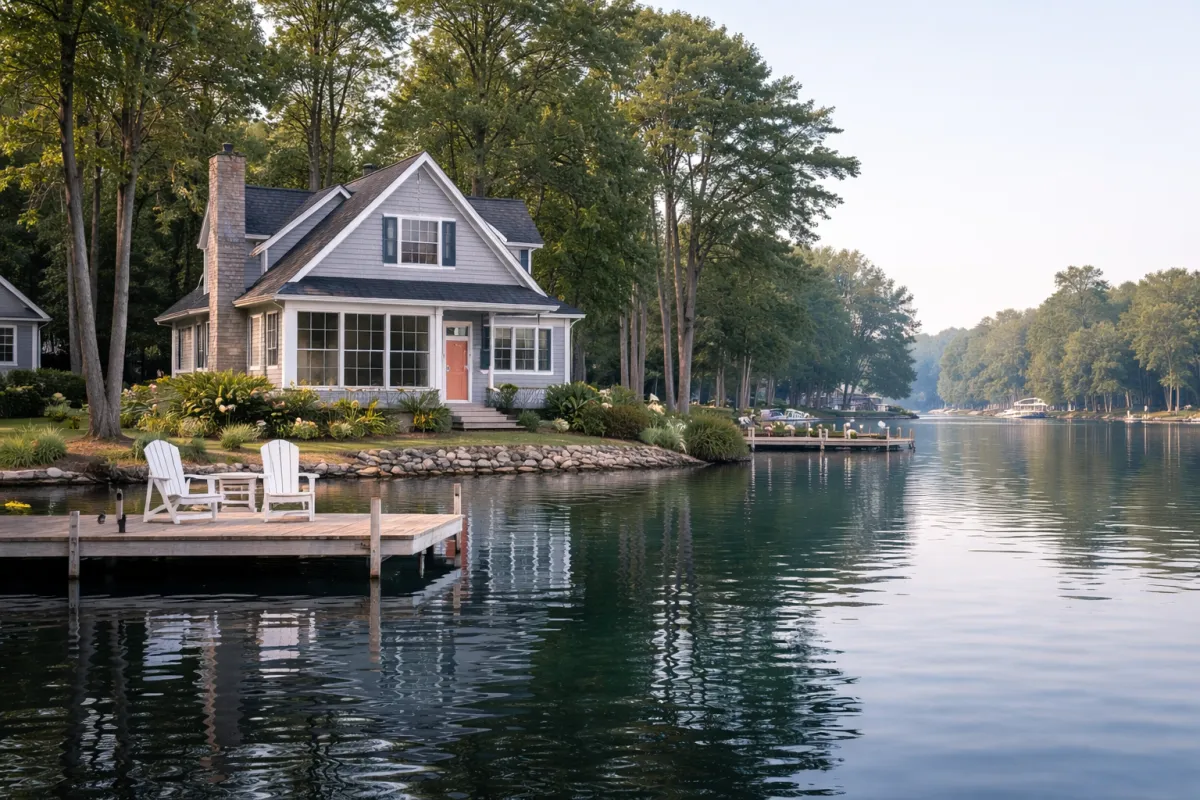
Buying a Lakefront Home in the Jackson County Area: What You Need to Know Before You Make an Offer
How is buying a lakefront property different from a typical home purchase, and what should you understand before you make an offer?
Fair Housing Disclaimer: This article provides general educational information for anyone evaluating their current home or considering a home purchase, rental, or property investment in Jackson County and the surrounding Southern Michigan Corridor. The information applies equally to all individuals regardless of race, color, religion, sex, national origin, disability, familial status, or any other characteristic protected under the Fair Housing Act. This article is intended as general informational content. It is not a recommendation of any area based on residents, demographics, schools, or any characteristic protected by fair housing law.
Jackson County has more than 125 lakes. Some are all-sports lakes where you can pull a skier or a wakeboard behind a boat. Some are quiet no-wake lakes better suited for fishing and kayaking. Some support year-round communities. Others empty out after Labor Day. The price of a lakefront property and the experience of owning it depend heavily on which kind of lake you are buying on, and what rights and responsibilities come with that water.
Buying a lakefront home is not the same as buying a house in a standard subdivision. The questions are different, the due diligence is more involved, and the legal framework is specific to Michigan water law. This article covers what you need to understand before you make an offer on a lakefront property in Jackson County and the surrounding area.
It is a starting point, not a substitute for working with an agent, attorney, and inspector who have experience with waterfront properties.
What Are Riparian Rights, and Why Do They Matter?
In Michigan, lakefront property owners are known as riparians. Owning land that directly touches a natural inland lake generally gives you riparian rights under Michigan law, subject to the reasonable-use doctrine and applicable regulation. Those rights generally include direct access to the water from your shoreline and the ability to install and maintain a dock on the bottomlands adjacent to your property, subject to applicable state regulation and local requirements, the right to anchor or moor a boat within your defined bottomland area, and reasonable use of the water for domestic purposes such as swimming, irrigation, and recreation.
What you do not own is the water itself. Michigan courts have consistently held that riparian rights are correlative, meaning your use of the lake must be reasonable relative to the size of your property and the rights of neighboring lakefront owners. A dock cannot be unreasonably long. It cannot extend onto a neighbor's bottomlands. It cannot obstruct navigation on the water.
Certain activities also require a permit from the Michigan Department of Environment, Great Lakes and Energy (EGLE) regardless of your riparian rights. Constructing a seawall or riprap wall, dredging, placing fill in a lake, and modifying the shoreline all fall under EGLE's jurisdiction. Improving or restoring your shoreline without the right permits can result in costly corrections.
One distinction that matters significantly in this market: your riparian rights apply only if your property directly touches the water. A parcel separated from the lake by intervening land, a road right-of-way, or other non-owned frontage often does not carry full riparian rights, but the answer can depend on the plat, deed language, and exact legal configuration. Deeded access to a shared beach or dock is not the same as owning waterfront. Understanding exactly what you are buying before you close is an important part of the process. Meet our team to find an agent with lakefront experience who can walk you through the specifics.
What Is the Difference Between an All-Sports Lake and a No-Wake Lake?
This is one of the first questions to answer when evaluating a lakefront property in Jackson County, and the answer shapes everything from the daily experience of living there to the resale market for the property.
An all-sports lake supports the full range of water activities: motorized boating, water skiing, wakeboarding, personal watercraft, sailing, swimming, and fishing. These lakes tend to be more active and social, particularly on summer weekends, and they typically attract buyers who want the full water recreation experience.
A no-wake lake limits motorized activity to slow speeds, which effectively restricts high-powered boating and water sports. These lakes are quieter, better suited to fishing, kayaking, canoeing, and paddleboarding, and tend to attract buyers looking for calm water and a more peaceful setting.
Jackson County has both. The right answer depends on how you want to use the water. Neither type is categorically better, but a poor fit for your intended use is difficult to address after closing. Confirm the lake designation before you make an offer. Boating rules may be governed by state law and, in some cases, local ordinances. Private associations may also impose rules on members or shared amenities, so it is worth verifying the current rules that apply to any specific property and lake.
What Should You Know About Riparian Property Lines?
Your upland property lines are on the survey. Your bottomland lines, which extend under the water from your shoreline, are a different matter, and they are the source of a disproportionate share of lakefront neighbor disputes in Michigan.
Michigan law handles bottomland property lines differently depending on the shape of the lake. For roughly circular lakes, property lines extend from the shoreline to a center point in the middle of the lake, using a method courts call the pie method. For oblong or irregularly shaped lakes, the process is more complex and typically requires a licensed surveyor experienced in riparian bottomland surveys.
Why does this matter practically? If you want to install a dock, you need to know where your bottomlands begin and end. A dock built on a neighbor's bottomlands is a trespass under Michigan law, regardless of intent. If you are buying a property with an existing dock, it is worth confirming the dock falls within your riparian boundaries before closing.
What Is a Prescriptive Easement, and Why Should Lakefront Buyers Know About It?
Lynn, Home 1st's broker, shares a Clark Lake example from local experience.
Two houses sat side by side on narrow lots at Clark Lake, with one shared dock positioned essentially on the property line between them. The original intent was straightforward: one side of the dock for each property. The owner of the first house never owned a boat and never used the dock for mooring anything. The owner of the second house, over time, began using both sides of the dock to moor boats and watercraft. This went on for more than 15 years without any objection from the first owner.
When the first owner eventually went to sell, the expectation was that the original arrangement would be restored: one side per property, as it had always been intended. The second owner disagreed. They had photographic evidence showing continuous, open, and uncontested use of both sides of the dock going back well over 15 years. The original docking arrangement had never been put in writing or recorded on the deed. It was a verbal understanding. The legal dispute that followed went to the second owner, who retained use of both sides of the dock under the doctrine of prescriptive easement.
A prescriptive easement is a property right acquired through long-term, continuous, open, and uncontested use of another person's land or property without any formal written agreement. In Michigan, the required period of use to establish a prescriptive easement is generally 15 years. Once established, it can be legally binding and transferable, meaning it can affect not just the current owners but future buyers as well.
Clark Lake also has a number of alleyways and access points that have been the subject of ongoing disputes between lakefront and non-lakefront property owners over the years. Who has the right to use them, for what purpose, and to what extent are questions that have produced litigation and neighbor conflict. These situations are not unique to Clark Lake, but they illustrate how access rights on and around Michigan inland lakes can be more complicated than they appear on the surface.
The practical takeaway for any buyer: verbal agreements about dock use, shared access, or lake access do not transfer with the deed. If an arrangement is informal, do not assume its scope, duration, or transferability without review by your agent, title company, and attorney. Ask your agent, your attorney, and your title company to review any informal arrangements that appear to be in place before you close.
How Do You Evaluate the Lake Itself Before Buying?
The physical characteristics of the lake matter as much as the house. Here is what to assess before committing.
Water quality and clarity. Water quality varies significantly across Jackson County's lakes. Water quality information may be available through EGLE and other local or lake-specific sources, but data availability varies by lake. Invasive species, algae levels, and historical pollution all affect both the daily experience and the long-term value of lakefront property. Ask for current data on any lake you are seriously considering.
Water depth and lake bottom. Depth can affect whether you can boat in or out from your dock, what kind of dock and boat lift may be suitable, and whether swimming off the shoreline is practical. Shallow lakes can be excellent for fishing and kayaking but limiting for motorized boating. Reviewing the depth chart before you buy is worthwhile.
Shoreline quality and stability. Sandy shorelines are generally considered the most desirable for swimming and recreational use. Rocky or marshy shorelines affect how you interact with the water and what maintenance the shoreline requires. Shoreline erosion is also a real issue on some Michigan lakes, particularly those with significant motorized boat traffic. An inspection that includes the shoreline condition, not just the house, is worth doing.
Water level fluctuations. Some Michigan lakes are subject to fluctuations that can affect dock access, shoreline stability, and property values. Understanding the historical pattern of water levels for any lake you are considering is part of evaluating the investment.
All-sports versus no-wake designation. Covered separately above, but worth reiterating here: confirm the designation directly rather than assuming based on what you observe during a visit.
What Do You Need to Know About Docks and Permits?
Most riparian property owners in Michigan have the right to install a dock, but that right is not unlimited.
Under Michigan's inland lakes rules, many private seasonal docks and hoists used for noncommercial recreation do not require an EGLE permit, provided they do not unreasonably interfere with the use of the water by others, interfere with water flow, or involve wetlands. Permanent docks or hoists left in year-round generally do require a permit.
Local ordinances, site conditions, and shoreline characteristics can also affect what is allowed. If the property already has a dock, ask about its history, placement, and whether any approvals were required. If you plan to install, replace, or expand a structure, confirm the current requirements with EGLE and the local municipality before budgeting the project.
How Do Community Associations and HOAs Work on Lakefront Properties?
Many lake communities in Jackson County and across Southern Michigan operate under a homeowners association, a lake association, or both. These organizations may impose private rules on members, shared amenities, and common areas, and those rules can affect issues such as dock use, shared access, noise, rental policies, and maintenance obligations.
Before making an offer on a property in a lake community, request and review all HOA and association documents. If you have not had the opportunity to review them fully before making an offer, consider making the offer subject to your review and approval of those documents. Pay attention to annual fees, special assessments, what shared amenities are included, and what the rules restrict. Some lake communities have restrictions that significantly limit how you can use the property. Others offer substantial shared amenities like boat launches, beaches, and maintained common areas that add real value.
Special assessments deserve specific attention. Lake communities sometimes levy special assessments for shoreline restoration, weed control, road maintenance, or infrastructure improvements. These assessments can be significant and are not always predictable. Understanding the financial history of the association before you close is a reasonable part of due diligence. For more on the costs buyers often overlook, see The Hidden Cost of Waiting to Buy.
How Is Financing Different for a Lakefront Property?
Lakefront and waterfront properties involve financing considerations that differ from a standard home purchase.
Down payment requirements. Many lenders require a larger down payment for lakefront properties, often 20 percent or more, depending on whether the property is used as a primary residence or a second home or vacation property. The classification matters for both the down payment requirement and the interest rate.
Specialized lenders. Not all lenders are equally comfortable with lakefront transactions. Properties with docks, boat lifts, shared water access, or seasonal utility setups require lenders who understand how to handle these features in the appraisal and underwriting process. An agent with lakefront experience can point you toward lenders who do this regularly. For a broader overview of how financing works in any home purchase, see How Do You Buy a Home the Right Way?
Appraisal complexity. Lakefront properties are harder to appraise than standard residential properties. Features like water frontage, dock rights, lake size, and shoreline quality all affect value, and comparable sales can be limited depending on the lake. Appraisals on lakefront properties sometimes come in lower than expected, which can affect financing.
Flood insurance. If the property falls in a designated flood zone, you will likely need separate flood insurance. This can add cost, and an elevation certificate may be requested or useful depending on the property, lender, and insurance situation. Check FEMA flood maps before you make an offer on any property with direct water access.
Property taxes. Lakefront properties in Jackson County typically carry higher assessed values than comparable inland homes, which means higher property taxes. Michigan's Proposal A caps taxable value growth for existing owners, but when a property sells, the taxable value uncaps in the following calendar year and resets to the assessed value. On a property where the prior owner has held it for years, the gap between the current taxable value and the assessed value can be significant. Use the assessed value, not the current taxable value, to estimate your tax obligation after purchase. For more on how uncapping works, see Why Do Property Taxes Increase After You Buy a Home in Michigan?
What Are the Differences Between a Year-Round and a Seasonal Lakefront Property?
Some lakefront homes in Jackson County are built and maintained as year-round residences. Others are designed as seasonal cottages, and the infrastructure reflects that: well and septic systems sized for part-year use, heating systems that are not built for Michigan winters, pipes that need winterizing, and docks that come out every fall.
The distinction matters for budgeting, insurance, and daily use. A seasonal property purchased as a year-round primary residence may need upgrades to support full-time occupancy. A year-round property used seasonally still carries year-round costs: property taxes, insurance, utilities, and maintenance do not pause because the lake is frozen. If you are evaluating how a lakefront home fits your broader housing needs, the Rightsizing Your Home in Michigan article is a useful starting point.
Winterizing a lakefront home properly is also not trivial. Draining water lines, securing or removing docks, storing boats and watercraft, and addressing any erosion or shoreline issues before freeze-up are all part of the annual rhythm of lakefront ownership in Michigan. Buyers who are new to lakefront property sometimes underestimate this side of the investment.
Can a Lakefront Property Be Used as a Short-Term Rental?
Many buyers across Jackson County and Southern Michigan purchase lakefront properties with short-term rental income as part of the plan. Platforms like Airbnb and VRBO have made this a more accessible income strategy, and the summer demand for lakefront rentals in this region is real. For a broader look at investment considerations, the Real Estate Investing Guide covers the fundamentals in detail.
Before purchasing a property with rental income in mind, confirm that short-term rentals are permitted under local zoning ordinances, township rules, and any applicable HOA or association restrictions. Regulations on short-term rentals have tightened in many Michigan communities in recent years, and the rules vary by municipality. A property that appears to be operating as a rental may not be in compliance, which can create added risk, cost, or limits on future use for a buyer.
If the rental use is permitted, insurance is a separate conversation. Many standard homeowner's policies do not cover short-term rental activity, and a commercial or specialty policy or a specific rider is often required. Consult an insurance professional who has experience with short-term rental properties before assuming standard coverage will apply.
What Are the Environmental Responsibilities of Lakefront Ownership?
Owning riparian property in Michigan comes with stewardship responsibilities that go beyond the property line.
Shoreline management is one area where this shows up directly. Michigan law and EGLE regulations govern what you can and cannot do to your shoreline, and for good reason: shoreline modifications can affect erosion, water quality, aquatic habitat, and the rights of neighboring owners. Removing native vegetation, placing fill, or modifying the shoreline without appropriate permits can trigger enforcement action and costly remediation.
Invasive species management is another area of shared responsibility on inland lakes. Many Jackson County lakes have active management programs for invasive aquatic plants and other species. Lake association participation and individual awareness of invasive species prevention practices, including cleaning watercraft before and after use, are part of responsible lakefront ownership. The Lakefront Homeownership Guide covers environmental stewardship and the full picture of what lakefront ownership involves.
Frequently Asked Questions
Q: Do I automatically have riparian rights if my property touches the water?
A: Generally yes, if the body of water is a natural inland lake and your property borders it directly. Properties separated from the water by a road, public land, or another parcel generally do not carry riparian rights. Deeded access to a shared dock or beach is a different situation from owning waterfront directly, and the distinction matters significantly. When evaluating any lakefront property, confirm exactly what water rights are included in the deed and title before you close.
Q: What is the difference between a riparian property and a deeded-access property?
A: A true riparian property has land that directly touches the water, giving the owner the full set of riparian rights under Michigan law, including the general right to install a dock on their riparian bottomlands, subject to applicable law and regulation, and direct water access from the shoreline. A deeded-access property gives non-riparian owners a right of access to the water, typically through a shared beach or public road end, but it does not convey the same rights. Deeded access can be valuable, but it is not the same as owning waterfront, and it generally does not include the right to install a private dock or moor a boat.
Q: Does Jackson County have both all-sports and no-wake lakes?
A: Yes. Jackson County's more than 125 lakes include both all-sports lakes that support the full range of motorized water recreation and quieter no-wake lakes better suited for fishing, kayaking, and paddleboarding. The applicable rules may come from state law, local ordinance, and, in some situations, private association rules affecting members or shared access. Confirm the current rules for the specific lake and property you are considering.
Q: How do I estimate property taxes on a lakefront home I am considering buying?
A: Use the property's state equalized value / assessed value figure used by the Michigan estimator, not the seller's current taxable value, when estimating post-purchase taxes. When you purchase a property, Michigan's Proposal A causes the taxable value to uncap in the following calendar year, resetting to the assessed value. If the prior owner has held the property for years, the taxable value may be significantly lower than the assessed value, and the taxes you will owe as the new owner will be higher than what the seller is currently paying. Jackson County property tax records are publicly accessible, and the Michigan Treasury's Property Tax Estimator tool at michigan.gov allows you to estimate taxes using the assessed value and applicable millage rates. For a full explanation of how uncapping works, see Why Do Property Taxes Increase After You Buy a Home in Michigan?
Q: Do I need a permit to install or replace a dock in Michigan?
A: It depends on the dock type, size, and location. Many private seasonal docks do not require an EGLE permit, while permanent docks generally do. EGLE's Water Resources Division regulates dock installation on Michigan's inland lakes. Even docks that do not require a formal EGLE permit are generally expected to comply with local ordinances and be placed within your riparian bottomlands without obstructing navigation or encroaching on neighboring rights. If the property you are buying has an existing dock, ask about its permit history as part of due diligence. If you plan to install a new dock, contact EGLE before budgeting the project.
Q: What should I look for in a lake community if I want to live there year-round?
A: Year-round livability involves practical infrastructure questions that seasonal buyers sometimes overlook. Consider the road maintenance situation, including who maintains access roads in winter and how that is funded. Confirm utility access: well and septic systems sized for part-year use may need upgrading for full-time occupancy. Evaluate snow removal access to the property and proximity to services. Some lake communities in Jackson County are active year-round, with full utility infrastructure and maintained roads. Others are built around seasonal use and carry different assumptions. Ask the right questions before you commit to a year-round lifestyle on a lake that empties out after Labor Day.
Ready to Talk About Lakefront Properties in Jackson County?
If you are thinking about buying a lakefront property in Jackson County or the surrounding area and want to talk through specific lakes, property features, market conditions, access considerations, and publicly available amenities, the Home 1st team is available at any stage of the process.
No pitch. No pressure. Just straightforward help from people who know this market and have worked lakefront transactions in Jackson County for years.
The Lakefront Homeownership Guide covers the full picture in detail, from choosing the right lake to closing the deal.
Call us at 517.780.8090 or reach out online. We will get back to you within 24 hours.
Home 1st Real Estate is a locally owned and independent brokerage at 2600 Airport Rd., Ste. 200, Jackson, Michigan 49202. We are committed to serving every person with equal professionalism and care, regardless of background, life stage, or circumstance. Equal Housing Opportunity.
More from Home 1st Real Estate:
Why Do Property Taxes Increase After You Buy a Home in Michigan?
What Real Estate Scams Are Targeting Michigan Property Owners Right Now?
Sources: Michigan Lakes and Streams Association, riparian rights overview (mymlsa.org); Michigan Department of Environment, Great Lakes and Energy, EGLE Water Resources Division (michigan.gov/egle); Living in Michigan, waterfront homeowner water rights guide (livinginmichigan.com); Outside Legal Counsel PLC, riparian rights Michigan (olcplc.com); Mika Meyers PLC, riparian property rights Michigan (mikameyers.com); Dingeman & Dancer PLC, Michigan riparian rights Q&A (ddc-law.com); Michigan Waterfront Alliance, riparian law FAQ (michiganwaterfrontalliance.com); Experience Jackson, lakes and rivers guide (experiencejackson.com); Michigan DNR, inland lake maps, Jackson County (michigan.gov/dnr); Michigan Treasury, Property Tax Estimator (michigan.gov/treasury); Michigan Compiled Laws, MCL 211.27a, Proposal A 1994; Home 1st Real Estate, local market knowledge, Jackson County and Southern Michigan Corridor


